Why shoppers leave your store without buying anything
Short answer
Shoppers who leave without buying usually do so for one of four reasons: they cannot find the product, they are not sure which product they need, there is nobody to ask, or you do not have it. Only the last one is a range problem. The other three you solve by making it easier to find things and to ask.
Why can't you see how many shoppers you lose?
Because a shopper who leaves leaves no trace. There is no receipt, no complaint, no abandoned basket like in an online shop. At most a member of staff notices someone wandering around looking and then leaving. That is why this loss is consistently underestimated: you see what you sell, not what you could have sold.
What are the main reasons shoppers leave empty-handed?
1. They cannot find the product. It is there, but in a different place from where the shopper expects, under a different name, or behind another product. Shoppers give up searching sooner than you think, especially if they know the store or website down the road has it too.
2. They do not know which one they need. Ten kinds of glue, fifteen kinds of screws, light bulbs with fittings that look alike. A shopper who is afraid of buying the wrong thing would rather buy nothing and look it up at home. Often they then order it online.
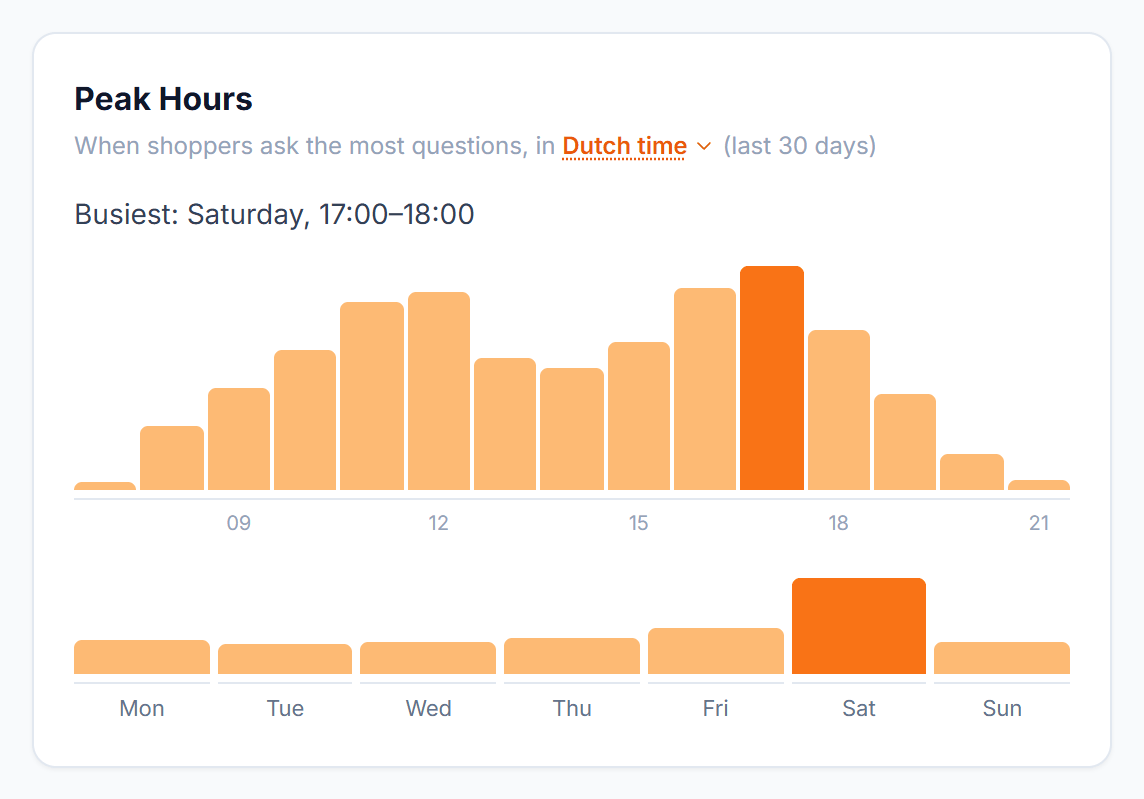
3. There is nobody to ask. Or there is someone, but they are already helping another shopper. At busy times this is the biggest cause (see Busy hours in retail).
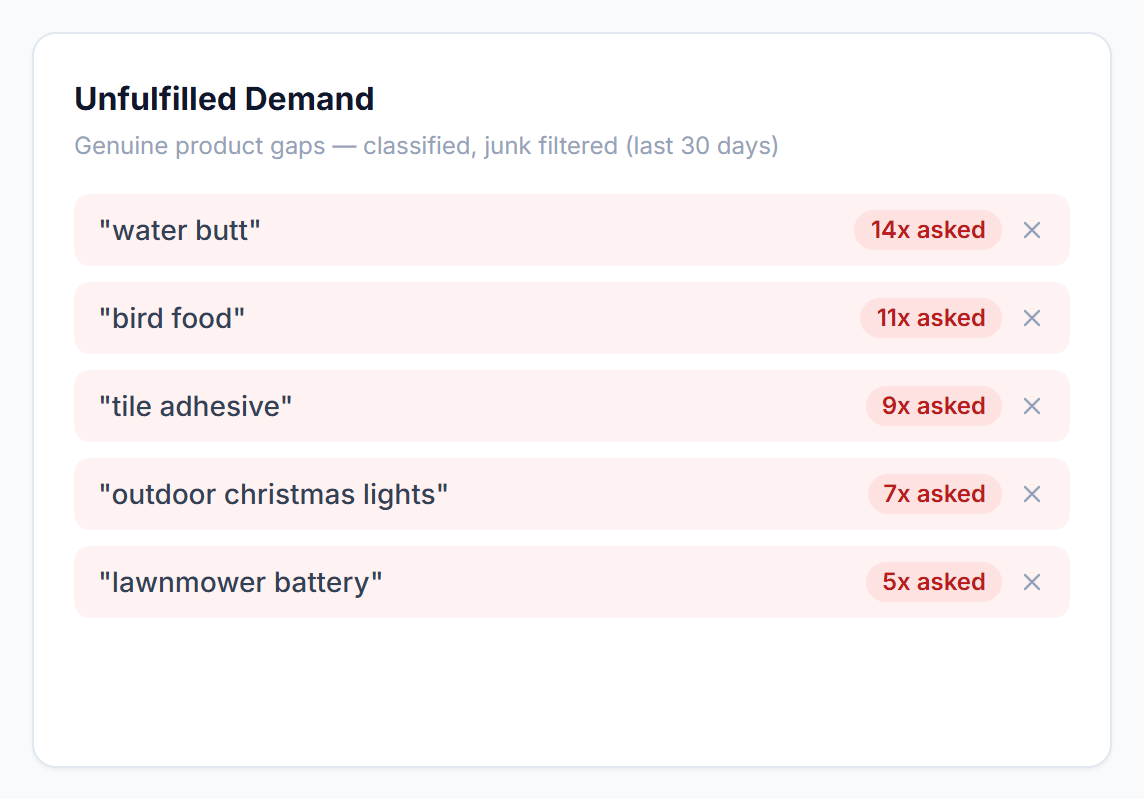
4. You really do not have it. Then the shopper has nowhere to go but a competitor. But it is still information: if it happens often, something is missing from your range.
How do you spot shoppers who are about to leave?
- They walk down the same aisle several times.
- They look at their phone while standing at the shelf, often to look the product up online.
- They pick up two packs and put both back.
- They look around for a member of staff and then walk on.
Train your staff to watch for these signals and approach the shopper themselves. "Can I help you with anything?" works better at this moment than at any other.
What can you do to lose fewer shoppers?
- Make products easy to find with signs in the shopper's words (see What copy on in-store signs actually works?).
- Help with the choice with a short explanation at the shelf: "For indoors", "For outdoors", "For wood and metal".
- Make asking easy, even when nobody is free.
- Keep track of what shoppers look for and do not find. It is your best source for range decisions.
- Offer an alternative when you do not have something: a similar product, ordering it in, or an honest referral. A shopper who was helped honestly comes back.
Frequently asked questions
How do I measure how many shoppers leave without buying?
With a footfall counter at the entrance and your till data, you can work out the gap between visitors and receipts. It does not tell you why they leave, but it does tell you how big the gap is and at which hours.
Is it a problem if a shopper only comes to browse?
No, not everyone comes to buy. It is about the shopper who comes in with a specific question and leaves without an answer.
What should I do when shoppers ask for something I do not sell?
Write it down. If the same request keeps coming back, that is a reason to change your range.
Conclusion
Most shoppers who leave without buying could have been helped. They could not find something, were unsure, or had nobody to ask. That is the opportunity. With Aisly, every shopper can ask their question the moment they hesitate, even when your team is busy. And what shoppers ask for that you do not have shows up in your dashboard as unfulfilled demand, so you know what is missing from your range.