What copy on in-store signs actually works?
Short answer
An in-store sign works when a shopper understands it at a glance. Give each sign one message, write in the shopper's words rather than the supplier's, make the most important word the biggest, and tell people what to do next. Anything longer than one sentence will not be read by someone walking past.
Why do most in-store signs go unread?
Because they are written for someone standing still, while the shopper is walking. A shopper in an aisle is looking for something specific and scans the surroundings for something they recognise. A sign with three lines of text, a logo and a promotion all at once asks for attention the shopper does not have at that moment.
The other reason: signs are often written from the point of view of the range ("Fixings") instead of the question ("Screws, plugs and nails"). Shoppers are not looking for a category. They are looking for the thing they have in mind.
How long should the copy on a store sign be?
Short enough to read while walking past. A few rules of thumb:
- Directional signs (above an aisle or department): two to four words. "Paint and brushes" works. "Everything for your indoor and outdoor painting projects" does not.
- Shelf signs (next to a product): one sentence, or a short list of no more than three points.
- Promotion signs: one offer, one price, one end date.
- Information signs (at the entrance, at the checkout): one message. Two messages means two signs, or a choice.
Which words work on a store sign?
The words your shoppers use themselves. A few ways to find them:
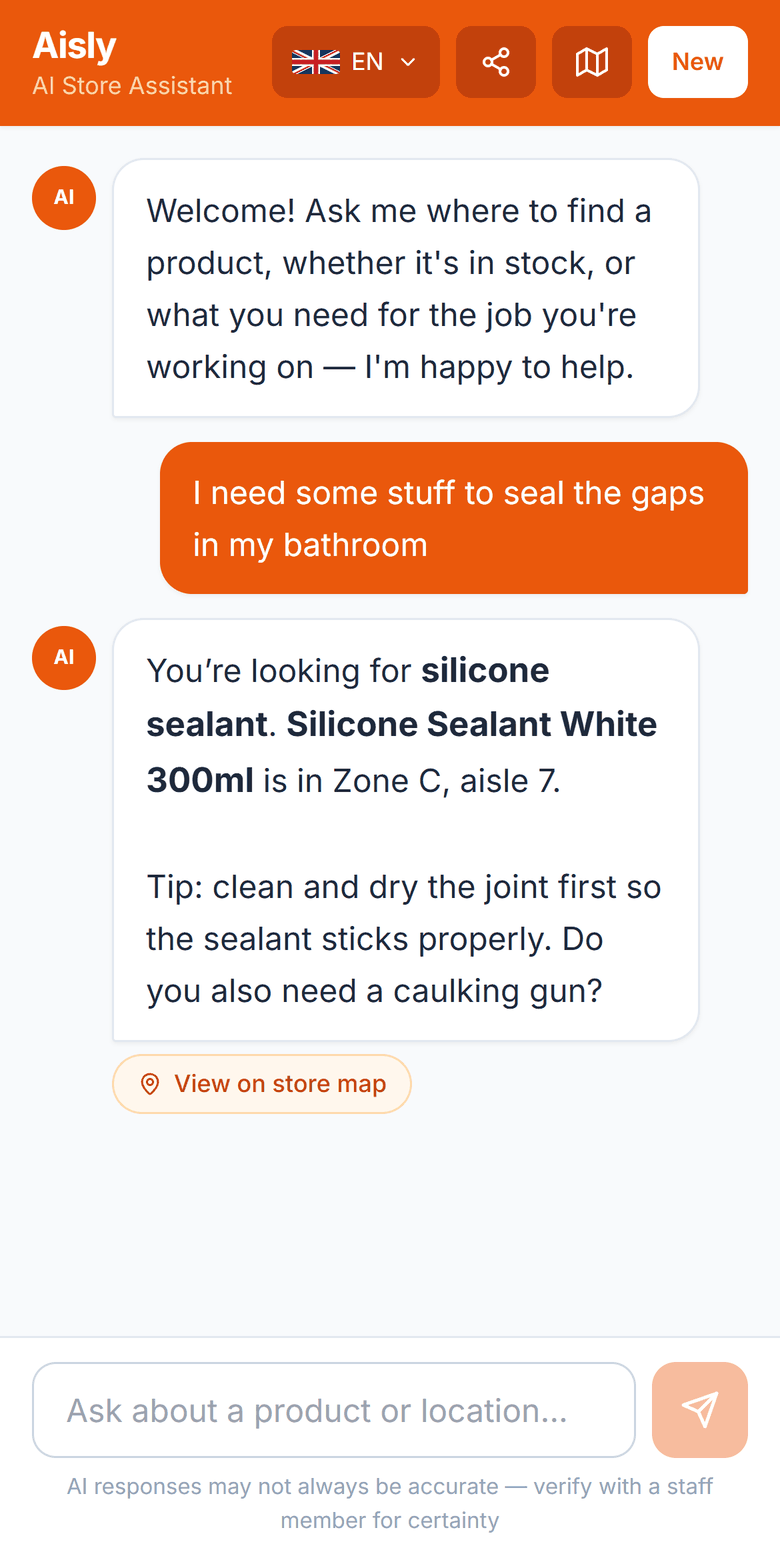
- Listen to the questions at the checkout and in the aisles. If shoppers ask for "that stuff to seal the gaps", "Sealant and filler" works better than "Sealing products".
- Use verbs. "Fix a leak" speaks to someone with a problem. "Plumbing" does not.
- Avoid internal language: product group codes, brand names shoppers do not know, abbreviations.
- Write in your shoppers' language. If you get many tourists or expats, consider a second language, set smaller, so the main sign stays calm.
How do you make a sign that works from a distance?
- Strong contrast: dark text on a light background, or the other way round. No text over a photo.
- One typeface, sans-serif for short text read from a distance.
- Make the most important word the biggest. On a directional sign that is the product group, not your store name.
- At eye level or higher, depending on how far away the shopper is when they need to choose.
What should a sign make the shopper do?
Every sign has one job: get the shopper to take the next step. "Garden to the left", "Ask us about flooring", "Scan for help choosing". A sign without an action is decoration.
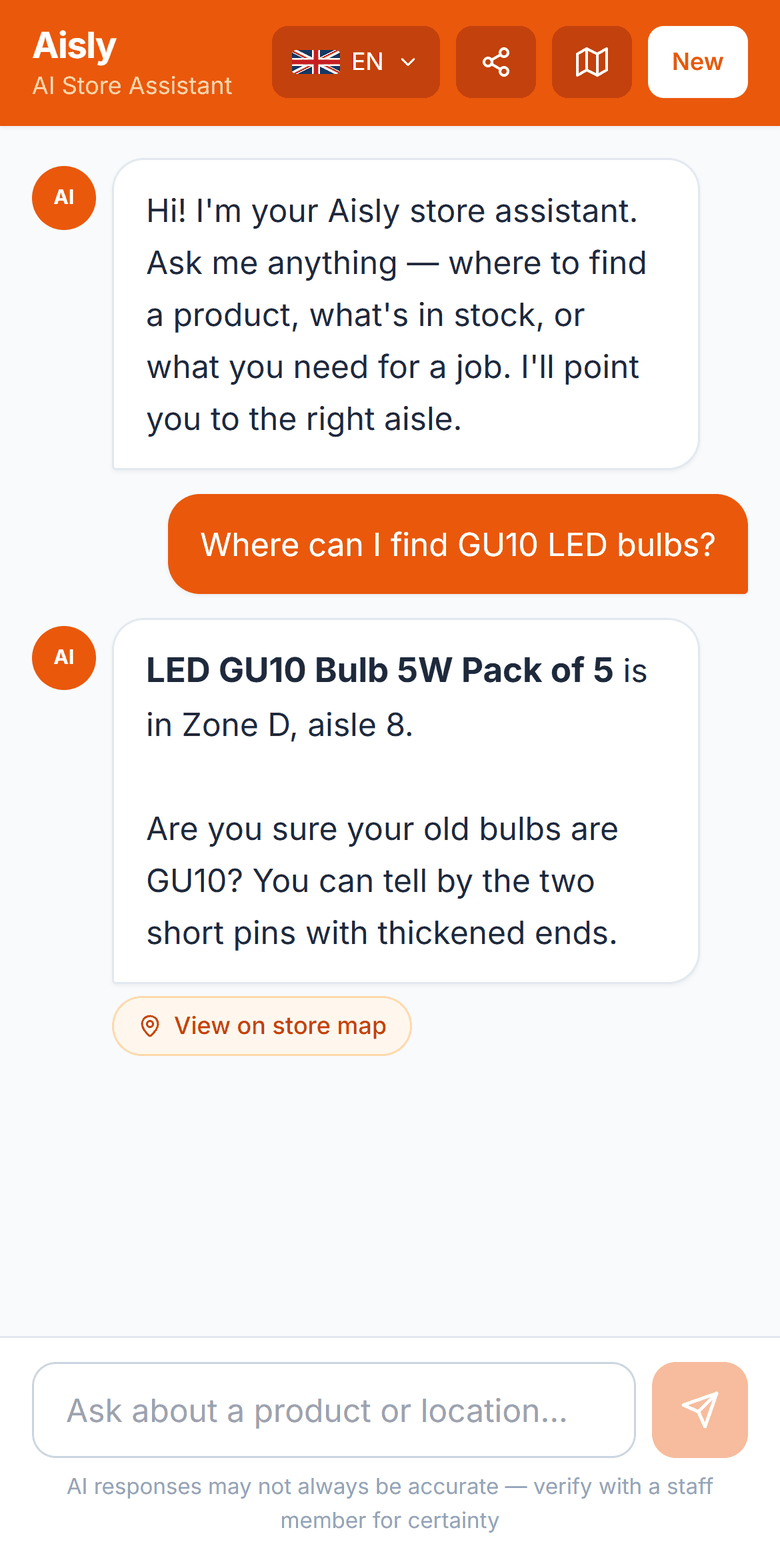
The same goes for a sign with a QR code. "Scan me" says nothing about what the shopper gets. "Looking for something? Scan and ask" does. More on that in Where should you put a QR code in your store?.
Frequently asked questions
How many signs are too many?
When signs compete with each other in the same field of view, there are too many. Remove outdated promotions and duplicated information before you put up anything new.
Should signs be formal or informal?
Match the way your staff talk to shoppers, and be consistent. A store where staff are relaxed and friendly, with stiff formal signs, feels distant.
How do I know whether a sign works?
Pay attention to the questions your staff keep getting. If people still ask where the brushes are while a sign is hanging there, the sign is not being seen or not being understood.
Conclusion
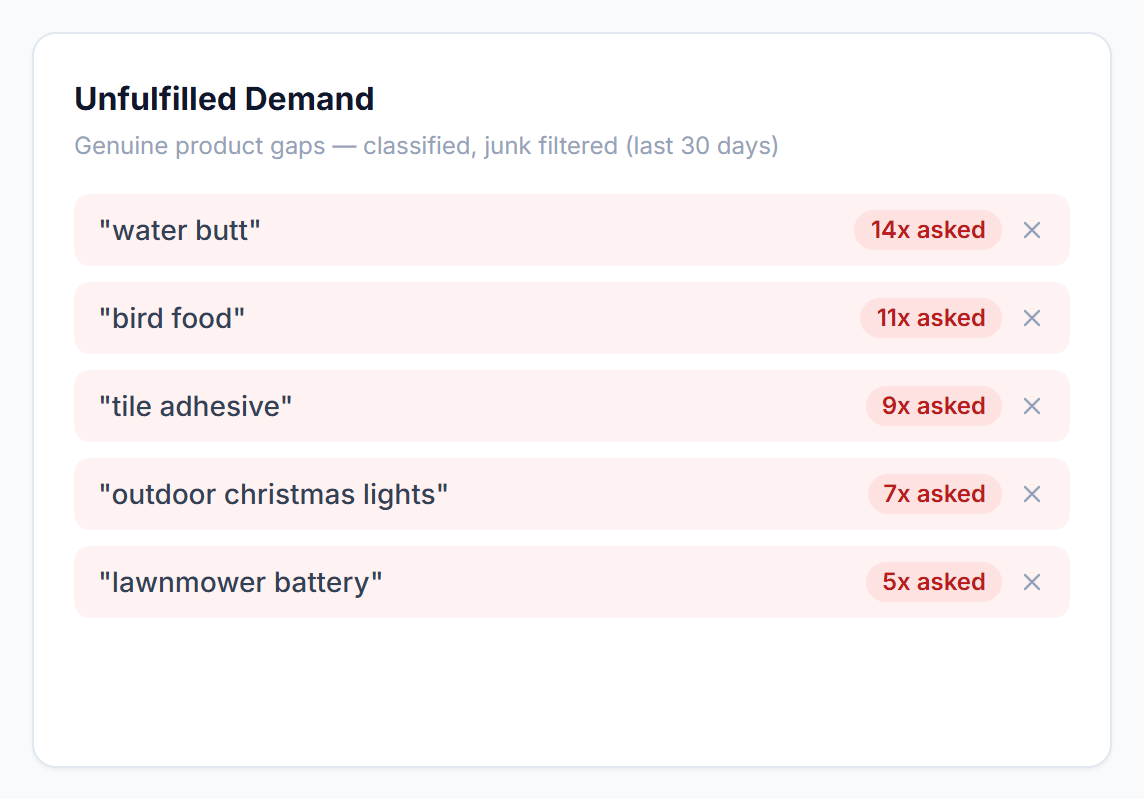
Good signs are short, use the shopper's words and say what the next step is. But a sign can only say one thing, and every shopper has a slightly different question. That is why more stores now hang one QR code next to their regular signs, so shoppers can ask their own question. With Aisly, they get an answer from your own product range, on their own phone. And the questions they ask show you exactly which words belong on your next sign.