Customer feedback in a physical store: what shoppers don't tell you
Short answer
The most useful customer feedback in a physical store is not what shoppers fill in on a survey, but what they ask and look for. Questions show what shoppers cannot find, what they do not understand and what they miss. Collect those questions systematically, alongside reviews and conversations, and use them to improve your range, your layout and your signs.
Why do most shoppers not give feedback?
Because from the shopper's point of view it takes effort and gets them nothing. A dissatisfied shopper rarely walks up to the desk to say so. They leave and do not come back next time. The feedback you do get often comes from the extremes: very happy or very unhappy. The large middle group, the shopper who "couldn't find it and just ordered it online", you never hear from.
What kinds of customer feedback are there in a store?
| Type | What it tells you | Limitation |
|---|---|---|
| Online reviews | How shoppers experience the store as a whole | Little detail, mostly the extremes |
| Surveys and satisfaction scores | A number you can follow over time | Low response, says little about why |
| Conversations with staff | What shoppers say directly | Rarely recorded |
| Complaints | What went wrong | Only from shoppers who take the trouble |
| Questions shoppers ask | What they look for, miss and do not understand | You have to collect them actively |
Why are shoppers' questions the best feedback?
Because a question arises in the moment and makes nothing look better than it is. A few examples of what questions tell you:
- "Where are the...?" again and again for the same product: it is in an illogical place, or the sign is wrong.
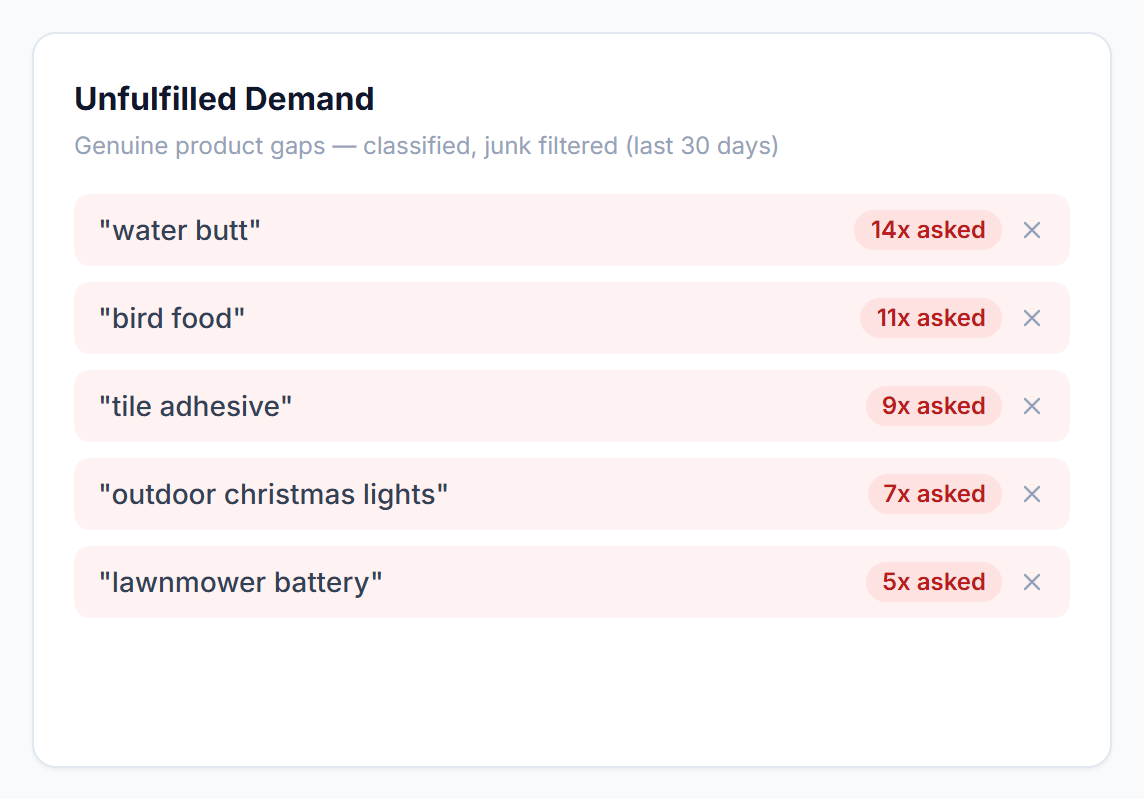
- "Do you have...?" for something you do not sell: a gap in your range.
- "What is the difference between...?": the explanation at the shelf falls short.
- Questions in another language: you have more shoppers who speak another language than you thought.
- Questions at a particular time of day: you know when shoppers need help.
How do you collect shoppers' questions in a physical store?
- Have your staff tally for a week which questions they get. Simple, but it immediately gives you a top ten.
- Keep a list at the till of products people ask for that you do not have.
- Give shoppers a way to ask their question digitally, for example through a QR code. Then the questions are recorded automatically, even when no member of staff is nearby.
- Discuss it every month. Feedback that leads nowhere is just a list.

What do you do with customer feedback?
Turn every recurring question into a concrete change:
- Often looked for, hard to find: move the product or change the signage (see What copy on in-store signs actually works?).
- Often asked for, not in stock: consider adding it.
- Often confused: add an explanation at the shelf.
- Often at the same time of day: adjust staffing.
And tell your team what you did with their input. That is the best way to make sure they keep passing it on.
Frequently asked questions
How often should I review customer feedback?
Monthly is enough for most stores to see patterns without chasing every single remark.
Do online reviews still matter?
Yes, especially for new shoppers who do not know your store yet. But they rarely tell you what to change.
How should I deal with negative feedback?
Treat it as free advice. Reply to public reviews briefly and concretely, and check whether it is a pattern or an exception.
Conclusion
Shoppers tell you every day what could be better, just not on a survey. It is in what they ask, look for and do not find. Whoever collects those questions knows exactly where their store is losing shoppers. With Aisly that happens by itself: every question a shopper asks through the QR code comes back in your dashboard, including what was asked for but is not in your range, at which hours and in which languages.