Where should you put a QR code in your store?
Short answer
Put a QR code where shoppers get a question, not where you happen to have space. That is usually at the entrance, at the start of the aisles, next to products shoppers hesitate over, and where they wait for a member of staff. Use the same code everywhere, at eye level, with one line that says what the shopper gets when they scan.
Why do QR codes in stores often go unscanned?
Three common reasons:
- It hangs where nobody has a question. A code on the toilet door or next to the emergency exit is seen by everyone, but nobody has anything to ask at that moment.
- It does not say what it is for. "Scan me" or a logo on its own gives the shopper no reason. People scan when they know what they will get.
- It is awkward to scan. Too small, too high, behind reflective glass, or somewhere you cannot stand still for a second.
What are the best places for a QR code in a store?
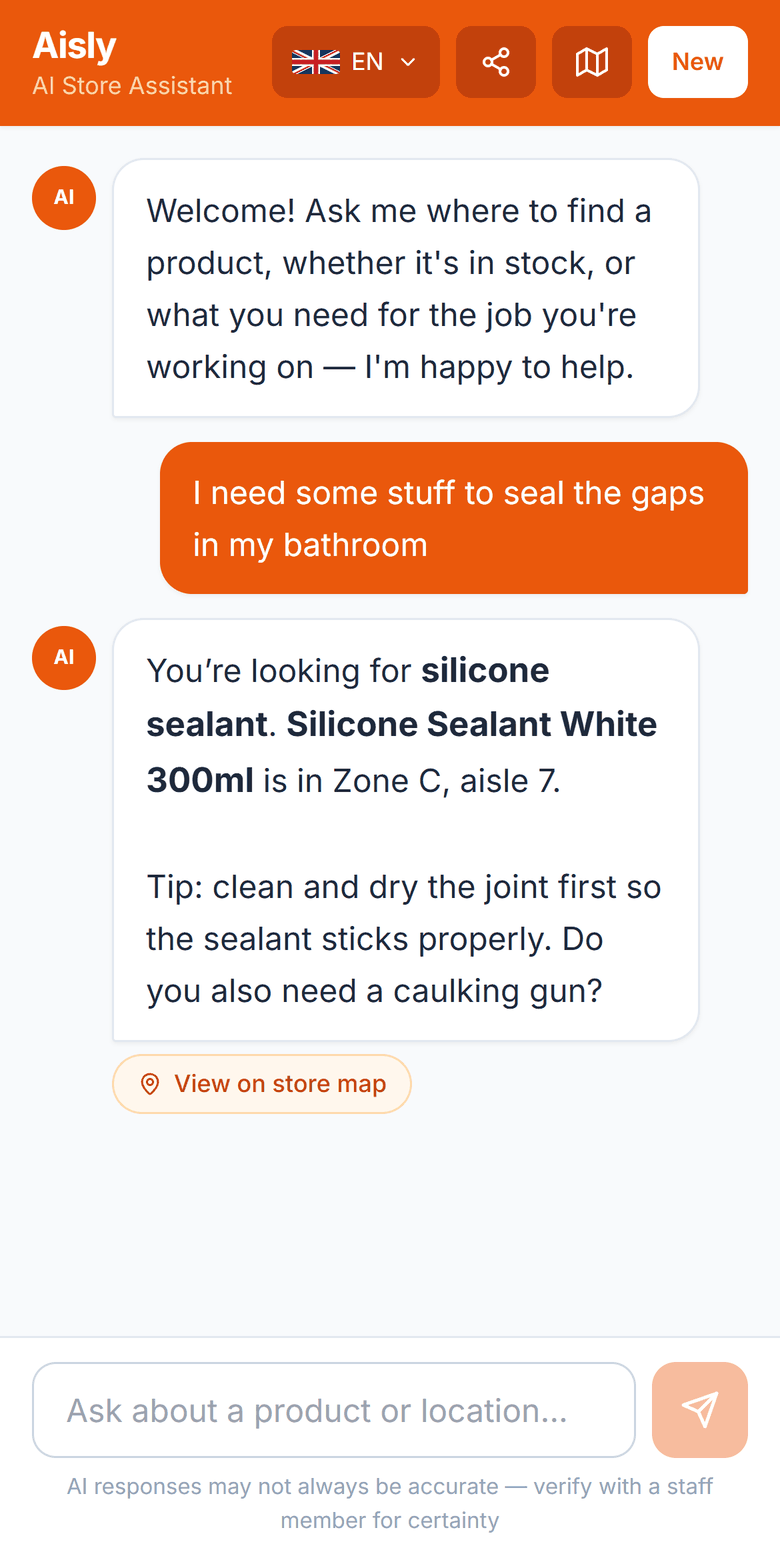
At the entrance. This is where shoppers decide where to go. A code that says "Looking for something? Ask here" helps the shopper who does not know which corner to start in.
At the start of the aisles. On the end cap or the aisle sign. That is where shoppers pause to decide which way to go.
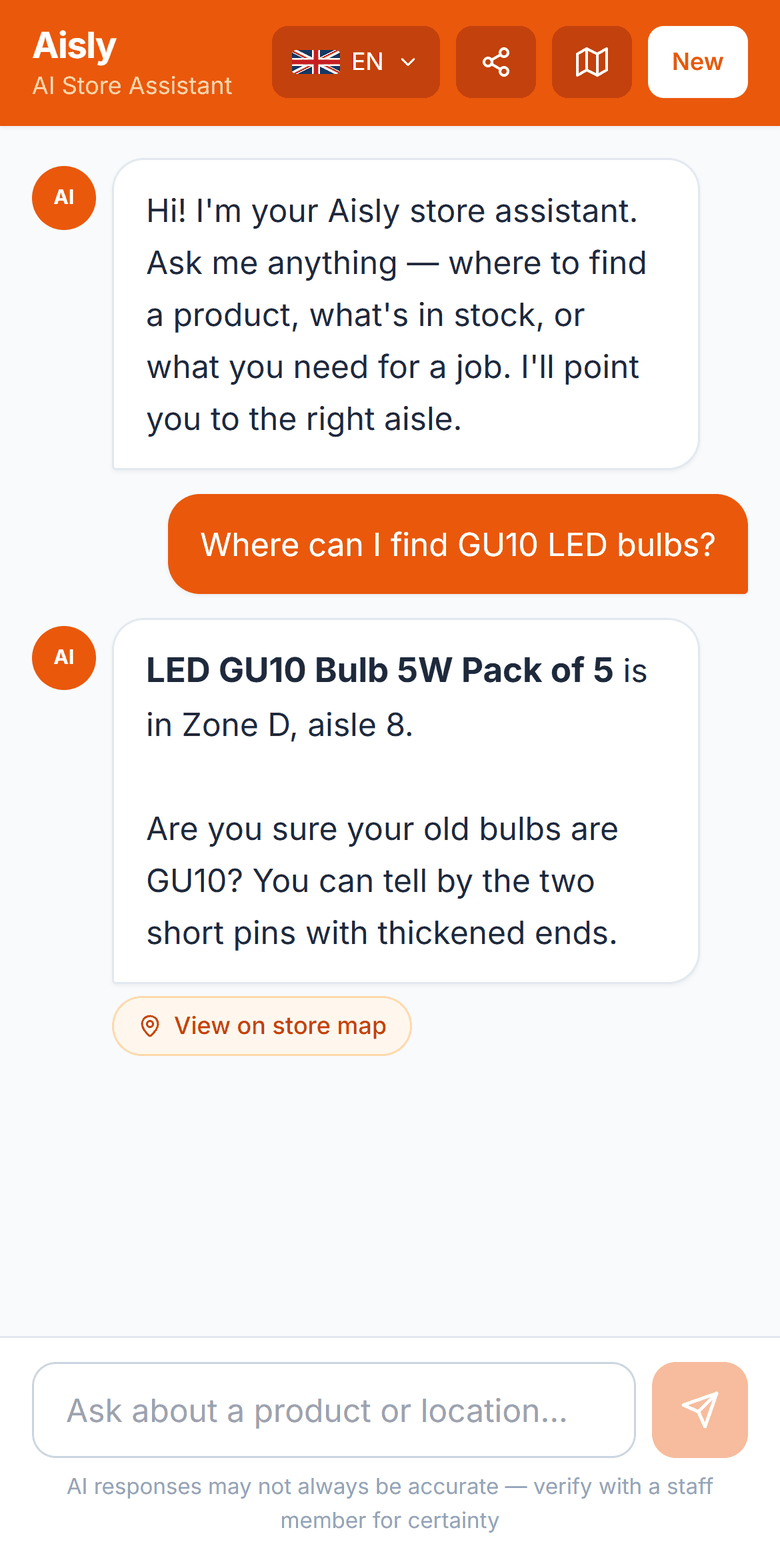
Next to products shoppers hesitate over. Think of departments with many similar-looking variants: screws, light bulbs, paint, glue, cables. That is where shoppers stand longest with two packs in their hands.
At the service desk and the checkout. This is exactly where shoppers wait for a member of staff. With a code they can ask their question instead of staying in the queue.
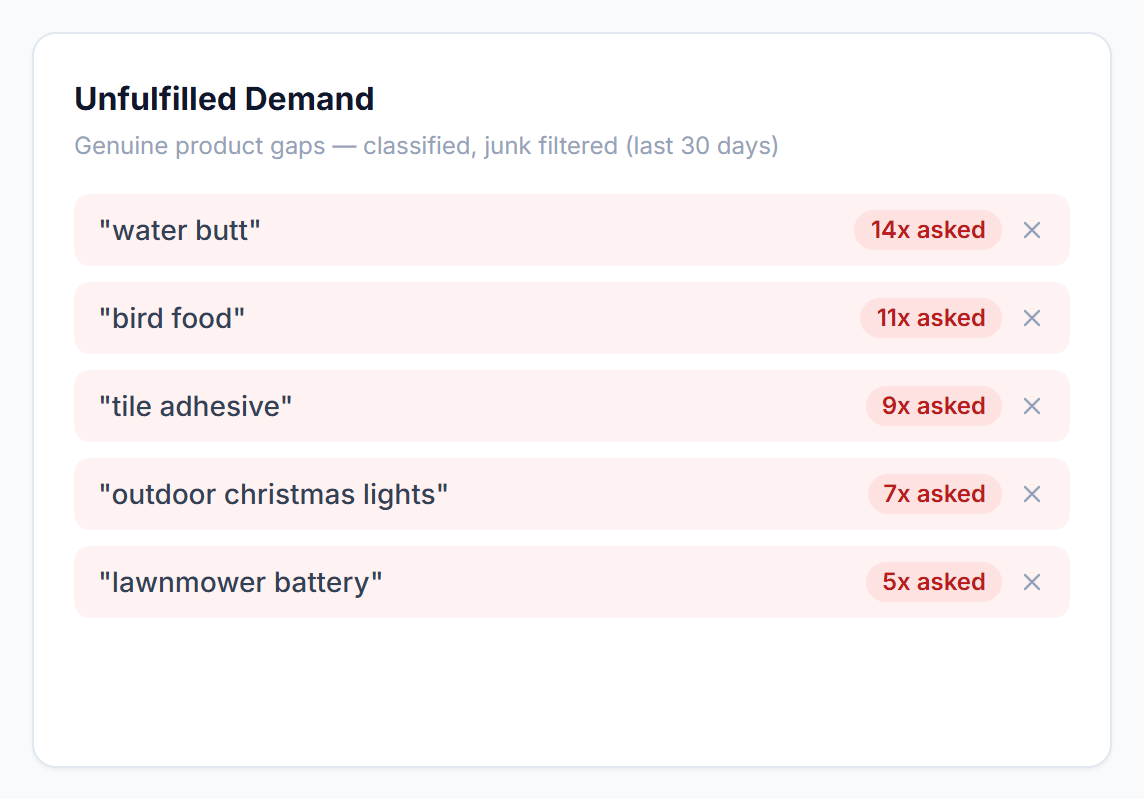
Wherever your staff get the same question again and again. Ask your team where they are stopped most often. That is a better map than any floor plan.
How many QR codes do you need?
One code, in several places. Use the same design and the same line everywhere, so shoppers recognise the code and know after one scan what it does. Different codes per department only make things harder to keep track of, for you and for the shopper.
How big should a QR code be, and how high should it hang?
- At eye level, roughly between 1.20 and 1.60 metres, so shoppers do not have to bend down or reach up.
- Big enough to scan from arm's length. The further away the shopper stands, the bigger the code needs to be. Test it with your own phone from where the shopper will stand.
- Matte paper or matte lamination, not glossy film under strip lighting.
- Clear space around the code, with no text or border touching it.
What should you put next to a QR code?
A promise and an action, in one line. For example:
- "Looking for something? Scan and ask."
- "Not sure which one you need? Scan for advice."
- "No app needed. Scan with your camera."
That last one matters: many shoppers assume they have to install something first. Otherwise, the same rules apply as for any other sign, see What copy on in-store signs actually works?.
Frequently asked questions
Do older shoppers scan QR codes too?
More and more people know how to scan with their phone camera, from menus and parking meters among other things. A clear line such as "scan with your camera" helps the shopper who has not done it often.
Should the QR code hang outside as well?
At the shop window it can be useful for people who want to know whether you have something outside opening hours. Inside is where the code is worth most, at the moment the shopper is looking for something in your store.
How do I know which spot works best?
Look at when people scan and what they ask. Move a code that is rarely used and see whether it makes a difference.
Conclusion
A QR code is only useful if it hangs where the question comes up and the shopper knows what they will get. That "what" makes the difference: a code that leads to your homepage does not help a shopper in the aisle. A code that lets them ask where a product is and which one they need, does. That is what Aisly does: one QR code for the whole store, no app, with answers from your own product range. You can try it yourself here.