What is a good retail employee really worth?
Short answer
The value of a good retail employee is not in the hours they work, but in what they do with a shopper: finding the right product, stopping a wrong purchase, suggesting a second item that is genuinely needed, and making sure the shopper comes back. That value leaks away when good people spend their time on questions that do not need their knowledge.
Where does a retail employee's value lie?
In the moments you never see on a receipt:
- The right product instead of the first product. A shopper who goes home with the wrong screw, bulb or paint comes back to exchange it, or does not come back at all.
- The question behind the question. "I'm looking for sealant" becomes, after one follow-up question, "my shower tray is leaking", and then the shopper also needs a sealant remover and a caulking gun.
- Trust. A shopper who was helped well once asks for the same person next time. That is a reason not to order online.
- Knowledge of the store. An experienced employee knows what is in stock, what arrives next week and what makes a good alternative.
Why are good retail staff so hard to find and keep?
Because the knowledge that makes an employee valuable takes years to build, while the job is often filled with tasks that do not use it. A specialist who spends the whole day answering "where are the bin bags?" gets little satisfaction from the work. And a new employee who cannot answer those questions feels unsure on the shop floor.
How do you protect your best people's time?
- Look at what they actually do in a day. Have them log the questions they get for a week. Often a large share is about where something is or whether it is in stock.
- Take the simple questions away from the specialists. With better signage, product information at the shelf, or a way for shoppers to ask those questions themselves.
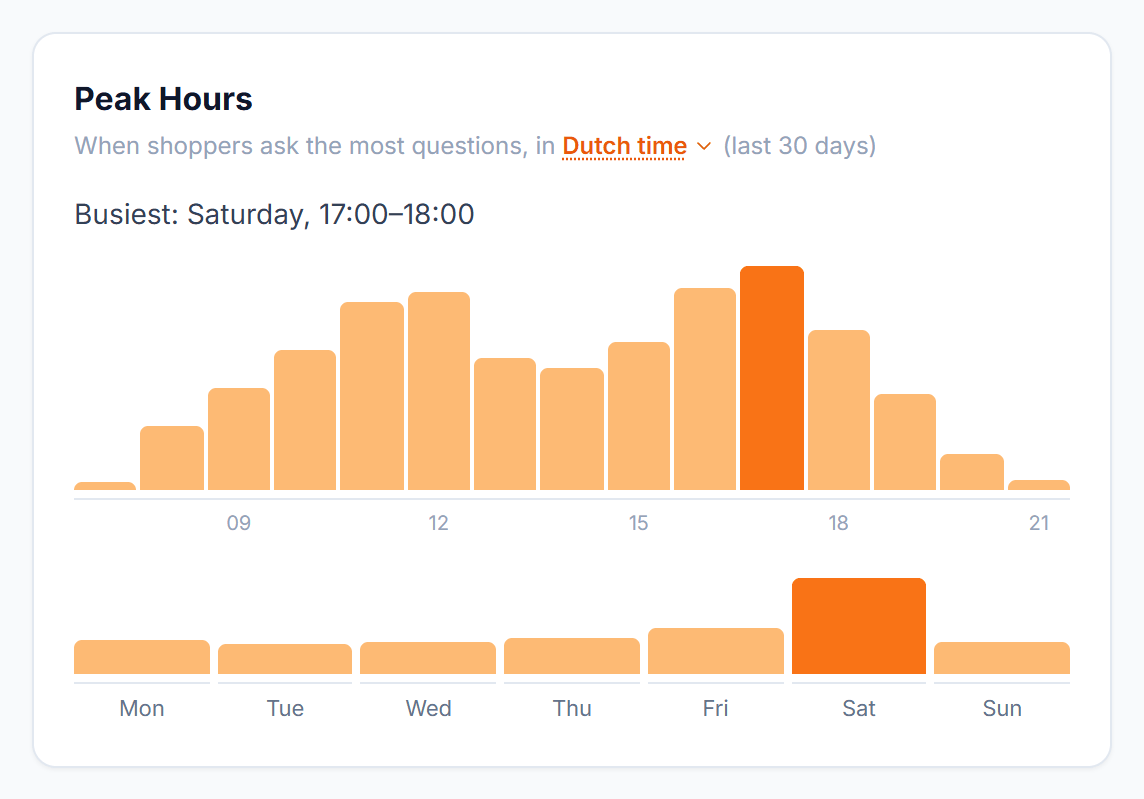
- Let them advise when it counts. On the floor during busy hours, not in the stockroom (see Busy hours in retail).
- Capture their knowledge. What an experienced employee knows about products and alternatives disappears when they leave. Write it down, in product descriptions or in an internal list of frequently asked questions.

How do you get new employees up to speed faster?
By giving them the same information shoppers need: where things are, the difference between these two products, what shoppers often ask. A new employee who can quickly look up where something is will approach a shopper sooner.
Frequently asked questions
How do I measure an employee's value?
Not only in revenue per hour. Also look at returns caused by bad advice, at how often shoppers ask for someone by name, and at how often a shopper comes in with one question and leaves with several products.
Is it wise to cut back on staff?
On hours, sometimes. On knowledge, almost never. A store without good advice can only compete on price, and an online shop usually wins that one.
What is the difference between a salesperson and an adviser?
A salesperson sells what the shopper asks for. An adviser makes sure the shopper gets what they need. Shoppers come to a physical store for the second.
Conclusion
Your best employees are the reason shoppers come to your store instead of ordering online. Their time is too valuable for questions that can be answered without expertise. An assistant like Aisly takes exactly those questions: where something is, whether you have it, what the difference is. When it does not know, it sends the shopper to a member of staff. That leaves your people time for the advice they are good at.